


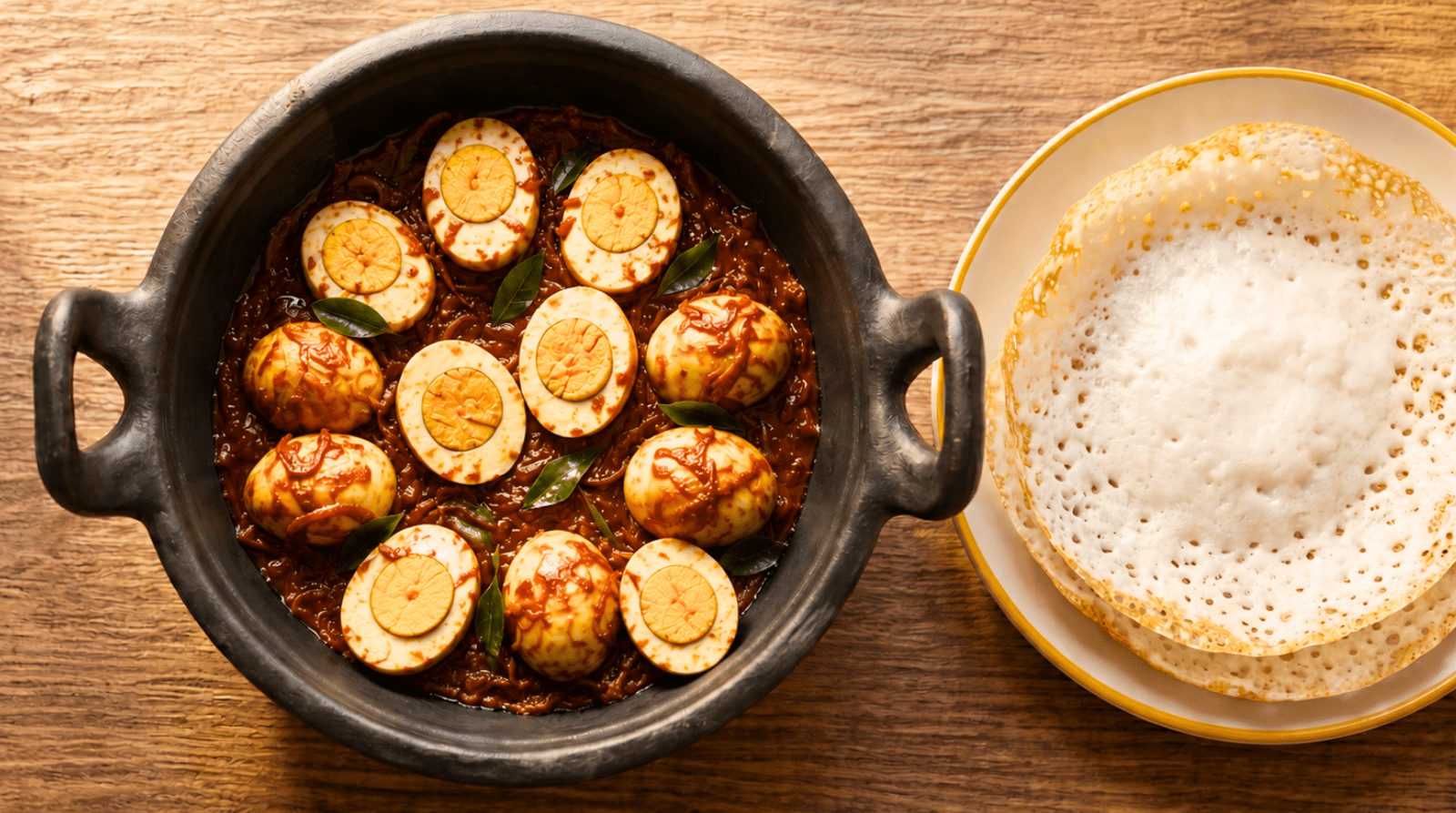
Egg roast is Kerala's answer to a lazy Sunday breakfast — boiled eggs folded into a deeply spiced onion-tomato masala, eaten with soft, lacy appam. It's not a quick tempering job; the onions need real time to soften, the spices need to lose their raw edge, and the masala needs to thicken into something the eggs can actually hold onto. Rush it, and you get a wet curry. Done right, it's closer to a roast — thick, clinging, aromatic.
A Twin Palmyra clay kadai is built for exactly this kind of slow build. Clay holds heat steadily through the long sauté, so the onions soften evenly instead of catching at the edges, and the masala thickens on its own terms rather than needing constant attention. The gentle heat also means the eggs, once added, warm through without turning rubbery.
Step 1 – Boil and Prep the Eggs
Bring water, salt, and 6 eggs to a boil. Once cooked, drain and place the eggs in a bowl of cold water. Deshell and set aside.
Cooling the eggs immediately in cold water makes deshelling far easier and stops the yolks from overcooking further.

Step 2 – Crush the Aromatics
In a Twin Palmyra stone mortar, coarsely crush the pepper seeds along with the ginger and garlic. Set aside.
Crushing rather than grinding keeps the ginger and garlic in small, distinct pieces rather than a smooth paste — this is what gives the finished masala its texture, and a stone mortar does this better than a mixer jar.

Step 3 – Build the Masala
Heat 3-4 tablespoons of oil in the clay kadai. Add 1 tablespoon mustard seeds and let them crackle, then add dry red chilli and sauté well. Add the crushed ginger, garlic, and pepper, and sauté for a few minutes. Add curry leaves and 3-4 green chillies, sauté again, then add 3-4 sliced onions and cook until translucent. Sprinkle in salt, then add turmeric, red chilli powder, coriander powder, and garam masala, sautéing until the raw smell of the spices disappears completely. Add the chopped tomato and sauté well, then pour in a little water, mix thoroughly, cover, and let it cook down.
The spice powders need real time in the pan — sauté until the raw smell is fully gone before adding the tomato, or the finished masala will taste flat. Clay's steady heat makes this stage far more forgiving than a thin metal pan.

Step 4 –
Add the boiled eggs to the kadai and mix gently with a neem wood spatula until coated in the masala. Cook for 4-5 minutes, then take off the heat.
A wooden spatula folds the eggs through the thick masala without breaking them apart — a metal spoon is more likely to tear the egg whites at this stage.

Servings: Serves 4-5 people
Twin Palmyra Clay Kadai Cooking Tips
- Season a new clay kadai before first use by simmering water in it for 10 minutes — this closes the pores and prevents cracking
- Cook on low to medium flame; clay retains heat well, so high flame is rarely needed
- Let a hot clay kadai cool gradually before washing — never place it on a cold or wet surface straight off the heat
- Hand wash only, no soap needed for most residue
- Store fully dry, uncovered, to avoid musty odor absorption
- A well-seasoned clay kadai improves with age — the more you cook in it, the better it performs
Egg roast doesn't need a long ingredient list, just patience with the masala and the right pot to build it in. Cooked slow in clay, the onions turn deeply flavorful and the eggs pick up every bit of that spice. Serve hot with soft appam, and let the kadai do the rest.