


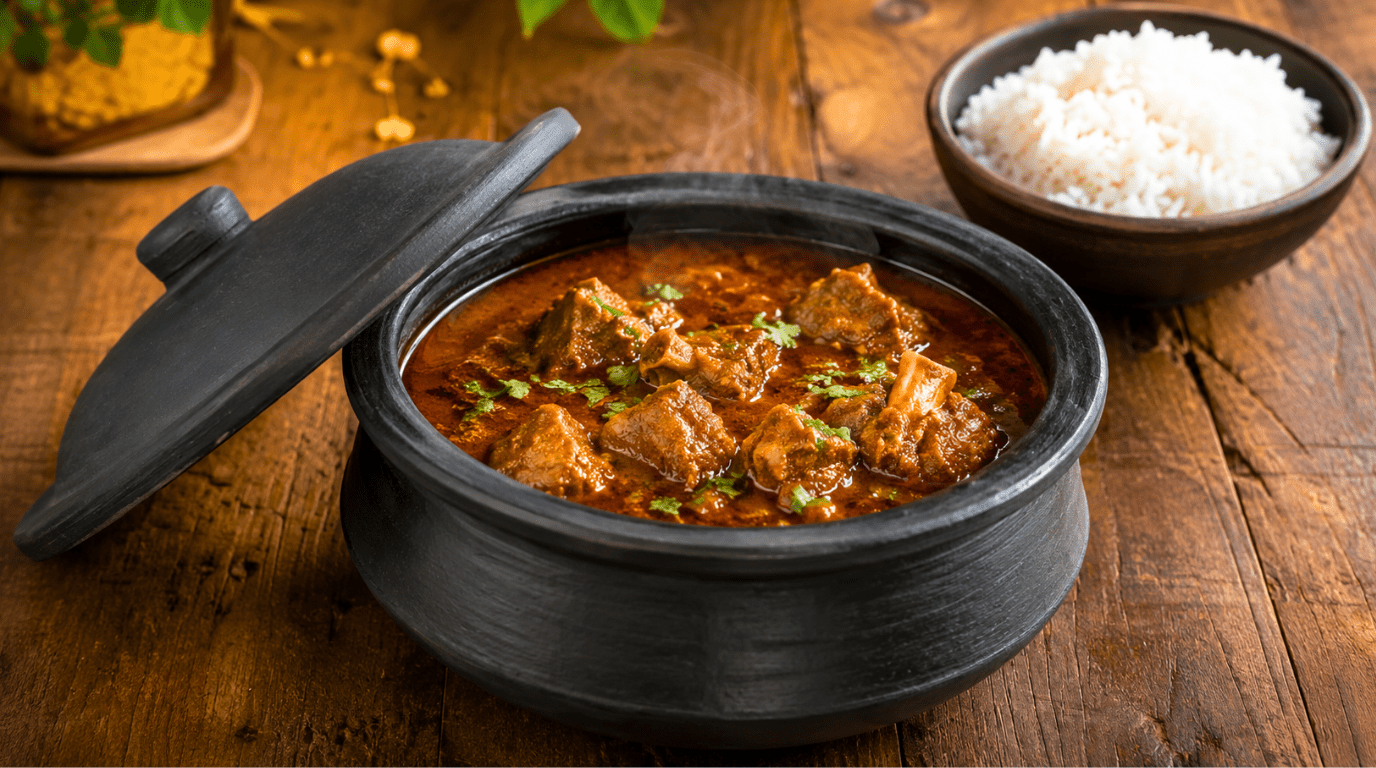
Mutton kuzhambu is a Sunday-lunch kind of dish — a rich, spiced gravy built from a freshly ground masala paste, not a shortcut powder. The paste is what makes or breaks it: garlic, ginger, whole spices, and aromatics ground smooth, then simmered slow with the mutton until the flavors have nowhere left to go but into the meat.
A Twin Palmyra clay pot with lid is built for exactly this kind of slow simmer. The lid traps steam so the gravy reduces gently instead of drying out, and clay's even heat means the mutton tenderizes without needing constant watching. Cooked this way, the curry comes out rich and dark, the way a Sunday kuzhambu should.
Step 1 – Sauté and Grind the Masala Paste
In a pan, sauté a portion of the 2 onions, curry leaves, 8-10 garlic cloves, ginger, 1 cinnamon stick, 1 cardamom pod, 5 cloves, 1 teaspoon fennel seeds, ¾ teaspoon cumin seeds, 1 teaspoon pepper, and 1 teaspoon poppy seeds until fragrant. Transfer to a Nutri Bullet blender attachment jar and grind to a smooth paste. Keep aside.
A smooth paste is essential here, not a coarse one — this is what gives the kuzhambu its body and thickness. A stone mortar won't get this fine, so the mixer jar is the right tool for this specific step.

Step 2 – Build the Base
In the clay pot, sauté the remaining onion until light brown. Add 2 small chopped tomatoes and the ground masala paste, along with turmeric powder, 1 teaspoon chilli powder, 1½ teaspoons coriander powder, and 1 teaspoon Kashmiri chilli powder (optional). Sauté for 3 minutes on low flame, then 3-5 minutes on medium flame, until the raw smell disappears completely.
This sauté stage needs real time — rushing it leaves a raw, sharp edge in the finished curry. Let the masala cook down until the oil starts to separate at the edges.

Step 3 – Slow-Cook the Mutton
Add 500 grams mutton to the pot and mix well into the masala. Pour in enough water to cover, check and add salt as needed, then cover with the lid and cook on low flame until the mutton is tender — about 30-35 minutes, so let it simmer slow rather than rushing with high heat. Finish with coriander leaves.
Slow-cooking covered in the clay pot instead of a pressure cooker takes longer, but the gravy reduces naturally to the right thickness and the mutton takes on far more of the masala's flavor over the extended simmer.

Servings: Serves 3-4 people
Twin Palmyra Clay Pot Cooking Tips
- Season a new clay pot before first use by simmering water in it for 10 minutes — this closes the pores and prevents cracking
- Keep the flame low for long simmers; clay holds heat well and rarely needs medium-high
- Let a hot clay pot cool gradually before washing — never place it on a cold or wet surface straight off the heat
- Hand wash only, no soap needed for most residue
- Store fully dry, uncovered, to avoid musty odor absorption
- A well-seasoned clay pot improves with age — the more you cook in it, the better it performs
Mutton kuzhambu takes patience — a proper ground paste, a slow simmer, a lid that traps the flavor in rather than letting it escape. Do all three in clay, and the gravy comes out rich and dark the way a Sunday lunch curry should. Serve it hot with rice, idli, or parotta.