


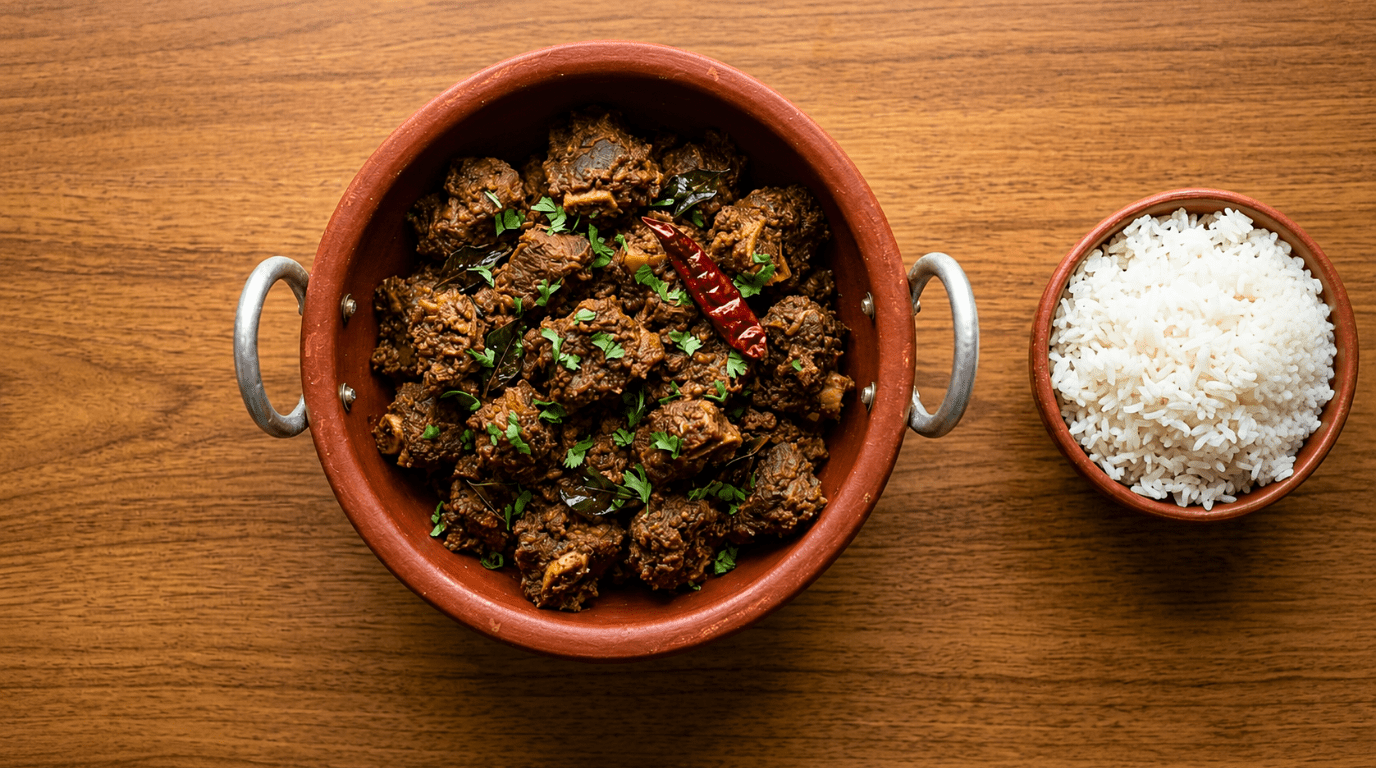
Chukka means dry curry, and that's exactly what this dish is built to be — mutton cooked down slow until tender, then roasted with hand-pounded whole spices until every trace of moisture is gone and only flavor is left. No shortcuts, no gravy to hide behind. Just meat, spice, and patience.
A Twin Palmyra clay kadai does double duty here — the mutton cooks slow and tender in it first, then the same pot roasts the spices in with the meat at the end. Clay's steady, even heat means the mutton doesn't catch or dry out during the long simmer, and the final roast happens gently enough that the spices toast without burning.
Step 1 – Slow-Cook the Mutton
In the clay kadai, add ½ kg mutton with 1 tablespoon oil, turmeric powder, 1½ teaspoons ginger garlic paste, and a little salt. Sauté well, then add a little water. Cover and cook on low flame until the mutton is tender — this takes about 30-40 minutes, so let it simmer slow rather than rushing the flame.
Cooking the mutton directly in the kadai instead of a pressure cooker takes longer, but the meat cooks more evenly and the clay keeps it from drying out even over the extended time.

Step 2 – Dry-Roast and Pound the Spices
In a separate pan, dry-roast 1½ teaspoons pepper, 1 teaspoon coriander seeds, ½ teaspoon fennel seeds, ½ teaspoon cumin seeds, 5 cloves, 1 cinnamon stick, 1 cardamom pod, and 2 dry chillies on low flame for 2 minutes. Let the spices cool, then pound them coarsely in a stone mortar. Set aside.
Roasting the whole spices before pounding brings out their oils and aroma — grinding them straight would give a flatter, less fragrant powder. A stone mortar keeps the texture coarse, which is what gives chukka its rustic bite.

Step 3 – Build the Chukka
Heat 2 tablespoons gingelly oil in the same clay kadai. Add 150 grams chopped shallots, curry leaves, and 1 dry chilli, and sauté well. Add the slow-cooked ½ kg mutton along with the ground spice powder and required salt. Cook for 5-7 minutes, stirring often with a neem wood spatula, until the mutton is well coated and dry. Finish with coriander leaves, mix well, and switch off the flame.
This final roast is where the dish comes together — keep stirring so the spice powder coats every piece evenly instead of catching at the bottom. A wooden spatula moves through the thick mutton without scraping or damaging the clay surface.

Servings: Serves 3-4 people
Twin Palmyra Clay Kadai Cooking Tips
- Season a new clay kadai before first use by simmering water in it for 10 minutes — this closes the pores and prevents cracking
- For long, slow simmers like this one, keep the flame low throughout — clay holds heat well and rarely needs medium-high
- Let a hot clay kadai cool gradually before washing — never place it on a cold or wet surface straight off the heat
- Hand wash only, no soap needed for most residue
- Store fully dry, uncovered, to avoid musty odor absorption
- A well-seasoned clay kadai improves with age — the more you cook in it, the better it performs
Mutton chukka rewards patience twice over — once while the meat slow-cooks to tender, and again while it roasts dry with hand-pounded spice. Do both in clay, and the flavor has nowhere to go but into the meat. Serve it hot with rice, rasam, or parotta, and let the kadai take the credit.