


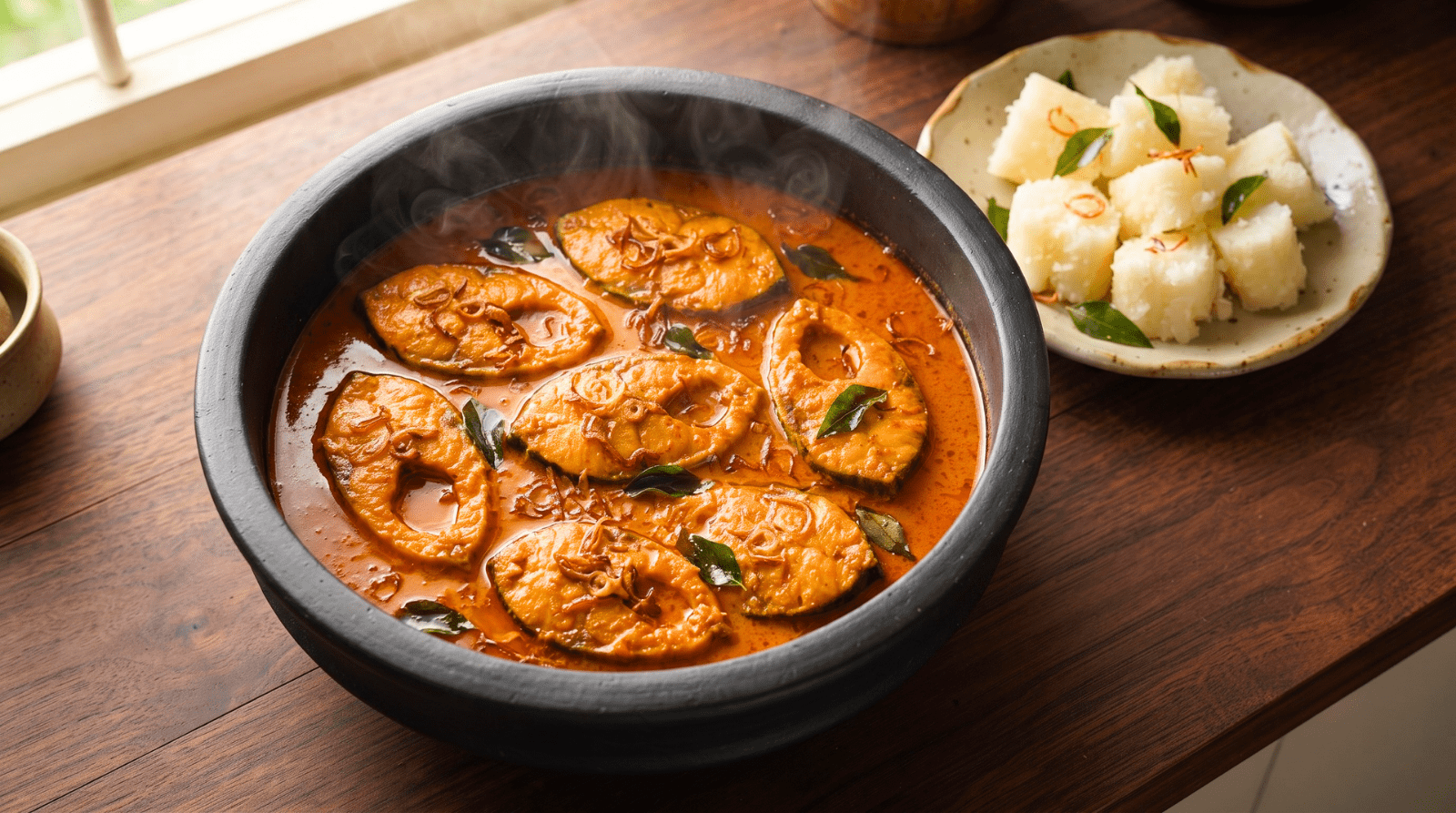
Meen kulambu lives and dies by two things — the coconut, extracted twice for thick and thin milk, and a masala ground fresh, not from a jar. King fish holds its shape well in a gravy like this, soaking up the coconut and spice without falling apart. Finished with a hot tempering poured straight over the top, it's the kind of curry that announces itself before it reaches the table.
A Twin Palmyra Meen Kulambu Satti is shaped specifically for this — its wide, shallow curve lets the fish sit in a single layer so it cooks evenly without breaking. Clay's steady heat keeps the coconut milk from splitting, which thin milk especially is prone to do over a harsh flame.
Step 1 – Extract the Coconut Milk
In a bowl, add 1 cup grated coconut and water. Squeeze thoroughly, then drain the thick coconut milk and set aside. Using the same squeezed coconut, add fresh water again, mix well, and drain the thin coconut milk. Set aside separately.
The second pressing gives a thinner, lighter milk that cooks the curry base — the first, thicker milk is saved for the very end, where its richness matters most.

Step 2 – Grind the Coconut Masala
On a plate, combine 1 cup grated coconut with 2 tablespoons red chilli powder, 1 tablespoon coriander powder, and ½ tablespoon turmeric powder. Transfer to a stone mortar along with the ginger and 5-6 garlic cloves, and grind into a smooth paste.
Grinding the coconut together with the spice powders rather than adding them separately later means every part of the masala carries the same depth of flavor once it hits the pot.

Step 3 – Build and Boil the Curry Base
In the Meen Kulambu Satti, add the ground coconut masala, then pour in the thin coconut milk and mix well. Add 3-4 green chillies, 2-3 sprigs curry leaves, 2 chopped tomatoes, and salt, and mix thoroughly. Cover and boil well. Remove the lid and check that the masala is fully cooked through.
Boiling the masala base properly before the fish goes in is what keeps the raw coconut taste from lingering in the finished curry — don't rush past this stage.

Step 4 – Cook the Fish
Add 1 kg king fish to the pot and mix gently. Cover and cook until the fish is well cooked through. Then stir in the thick coconut milk and mix well. Remove from the heat and set aside.
Adding the thick coconut milk only at the very end, off the boil, keeps it from splitting — this is the richest part of the curry and it should stay smooth.

Step 5 – Temper and Finish
Heat oil in a separate pan, add mustard seeds, and let them splutter. Add 3-4 dry red chillies, 1 teaspoon fenugreek seeds, and 7-8 shallots, and sauté well until fried through. Pour this tempering directly into the fish curry pot and mix well with a neem wood spatula.
The tempering is poured in hot, straight from the pan — this is what gives meen kulambu its final layer of aroma that a curry cooked without a separate temper simply won't have.

Servings: Serves 4-5 people
Twin Palmyra Meen Kulambu Satti Cooking Tips
- Season a new clay pot before first use by simmering water in it for 10 minutes — this closes the pores and prevents cracking
- Add thick coconut milk only at the end, off a rolling boil, to prevent it from splitting
- Avoid stirring the fish vigorously once it's in the curry — gently shake the pot side to side instead to keep the pieces intact
- Let a hot clay pot cool gradually before washing — never place it on a cold or wet surface straight off the heat
- Hand wash only, no soap needed for most residue
- Store fully dry, uncovered, to avoid musty odor absorption
King fish curry rewards a little extra effort — two pressings of coconut milk, a fresh-ground masala, and a tempering poured on right at the end. Made in a clay meen kulambu satti, the fish stays intact and the coconut milk stays smooth from start to finish. Serve it hot with boiled tapioca or rice.