


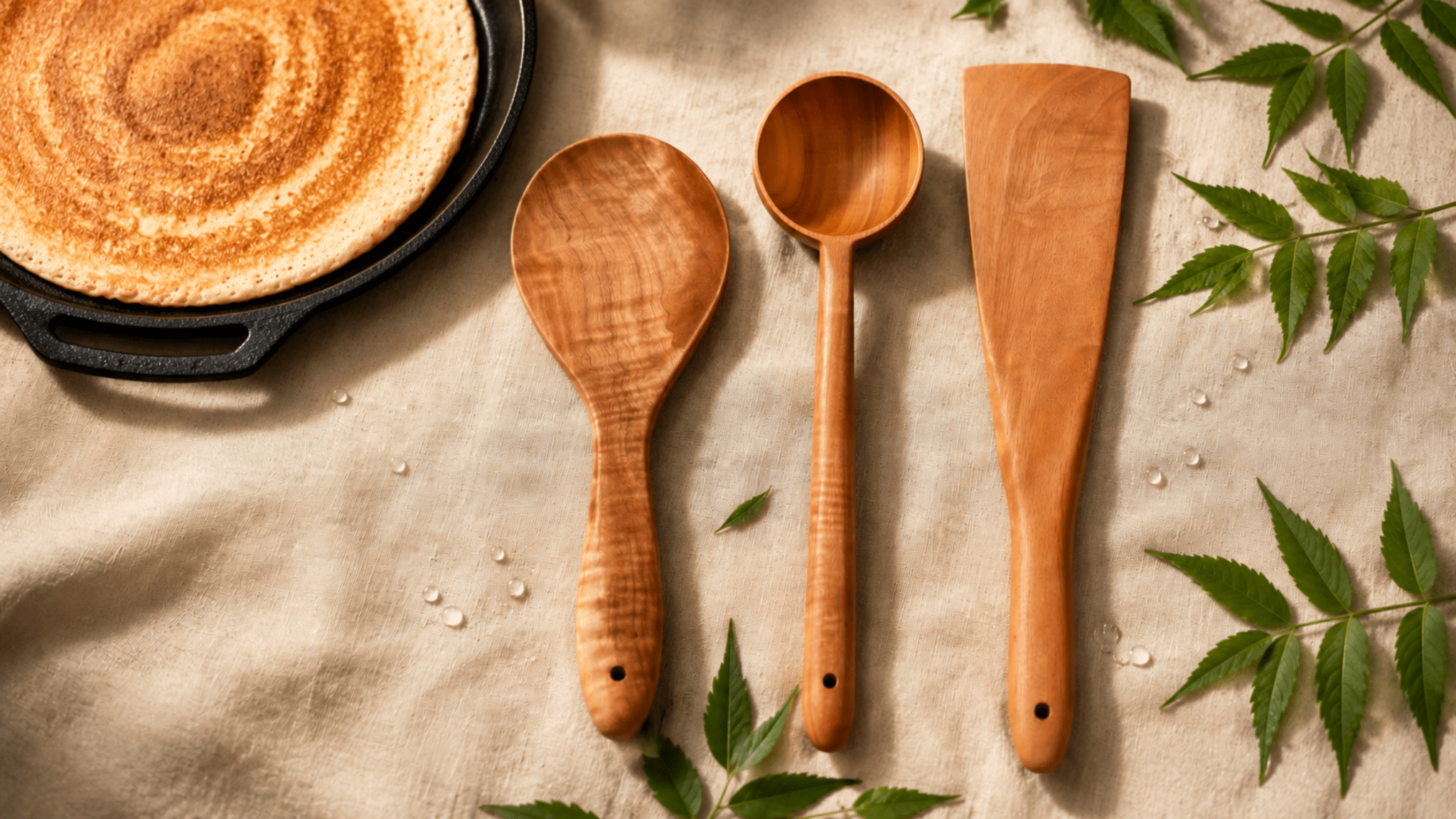
Walk into any Indian kitchen and you'll likely find plastic spatulas, nylon ladles, and silicone spoons. Affordable, lightweight, and available everywhere — plastic utensils became the default in the 1990s and 2000s.
But plastic has a problem. And neem wood has some remarkable qualities that most people don't know about. Here's a direct comparison.
1. Plastic Releases Chemicals When Heated — Neem Wood Doesn't

Most plastic kitchen utensils are made from polypropylene (PP) or nylon. When these plastics are exposed to the high temperatures of Indian cooking — especially when stirring hot oil or cooking at 180°C+ — they can release microscopic plastic particles and chemical compounds including bisphenol A (BPA) and phthalates.
A 2021 study found that plastic spatulas used in high-temperature cooking released millions of microplastic fragments per use. These end up in your food.
Neem wood is completely inert at cooking temperatures. It contains no synthetic chemicals and releases nothing into your food regardless of heat.
2. Neem Wood Is Naturally Antibacterial
Neem (Azadirachta indica) is widely known in Ayurveda for its antimicrobial properties. The wood contains natural compounds including nimbidin and nimbolide that actively inhibit bacterial growth on the surface of the utensil.

Plastic utensils, on the other hand, develop micro-scratches with use that trap bacteria. These bacteria colonies are impossible to remove with normal washing.
This is why neem wood utensils have been the traditional choice for Indian cooking for centuries — the antibacterial property wasn't just cultural wisdom, it was practical hygiene.
3. Neem Wood Is Scratch-Free on All Cookware
Metal spatulas scratch non-stick coatings, releasing coating particles into your food. Hard plastic spatulas, despite marketing claims, also develop burrs with use that scratch non-stick surfaces.

Neem wood is firm but not hard enough to damage non-stick, ceramic, cast iron, or stainless steel cookware surfaces. Indian cooks have used wooden spatulas in cast iron kadais for generations for exactly this reason.
4. Neem Wood Lasts Longer
A well-maintained neem wood spatula can last 5–10 years. Plastic utensils typically last 2–3 years before they crack, warp in the dishwasher, or become discoloured.
The key to maintaining neem wood: hand wash only, dry immediately, and apply a light coat of coconut oil once a month to prevent drying and cracking.
5. Plastic Is an Environmental Problem — Neem Wood Isn't
India generates millions of tonnes of plastic waste annually, and kitchen plastic is a major contributor. Plastic utensils cannot be effectively recycled due to food contamination.

Neem wood utensils are fully biodegradable. A neem wood spatula at the end of its life can be composted. No landfill, no microplastic trail in waterways, no carbon debt from recycling.
6. Neem Wood Looks and Feels Better
This is subjective but consistently reported: cooking with a natural wood utensil feels different. The weight, warmth, and texture of wood in your hand creates a more mindful, connected cooking experience than a plastic handle.

And neem wood is beautiful — the grain, the natural colour variations, the slight patina it develops over years of use. These are not things that ₹50 plastic spatulas offer.
Making the Switch — A Practical Guide
You don't need to throw out all your plastic utensils at once. Start with the ones that get most heat exposure:
● The spatula you use for dosa and roti — replace first
● The ladle you use for hot dal and sambar — replace second
● The stirring spoon for curries and gravies — replace third
Once you've used a neem wood spatula for a few weeks, most people find they don't want to go back.
Twin Palmyra stocks neem wood kitchen utensils as individual pieces (from ₹129) and as sets of 2, 3, 4, 5, and 7 pieces. Browse the full Wooden Spatulas collection at twinpalmyra.com.