


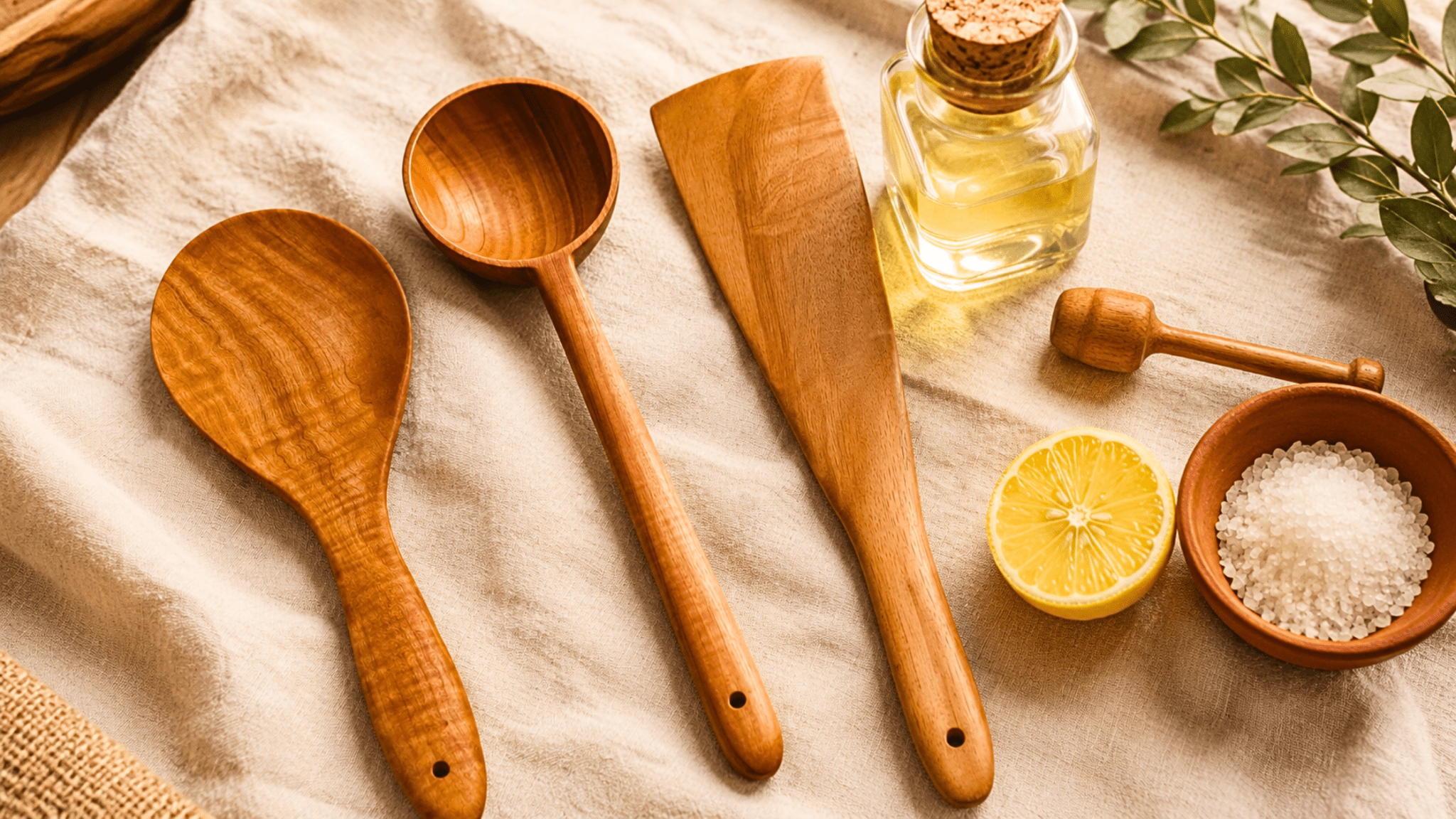

The aroma of curry leaves sizzling in hot oil, the gentle pop of mustard seeds, and a wooden spoon stirring Rasam — all bring warmth to an Indian kitchen. Learning how to clean and care for wooden spoons naturally ensures these utensils last for years while keeping food safe, flavors pure, and wood strong.
For generations, Indian kitchens have used wooden spoons as trusted companions. They stir sambar, sauté poriyal, and mix Dosa batter effortlessly. Wooden spoons carry memories of grandmothers cooking and recipes passed down through love.
Though sturdy, wooden spoons are alive. Made from natural grain, they breathe, absorb flavors, and age beautifully. With proper care, they retain strength, color, and charm for years.
At Twin Palmyra, each neem wood spoon blends tradition and sustainability. Our handcrafted utensils merge old kitchen wisdom with modern eco-friendly living.
Why Wooden Spoons Need Special Care
Wooden spoons are gentle on cookware and food. They don't react with tamarind or tomatoes, won't scratch earthen pots, and never leach chemicals.
Because wood is porous, it absorbs moisture and flavor. This gives character, but also requires care. Learning to clean and care for wooden spoons naturally prevents drying, cracking, and warping.
How to Clean and Care for Wooden Spoons Naturally?
- Wash by hand: Rinse with hot water and mild soap immediately after use. Avoid dishwashers.
- Don't soak: A quick wash and towel dry is enough.
- Remove odors naturally: Scrub garlic or onion smells with lemon or baking soda. Rinse and dry.
- Air dry completely: Never store spoons wet.
- Oil regularly: Massage once a month with coconut or mineral oil to nourish the wood.

Pro Tip: Neem wood spoons respond beautifully to coconut oil, enhancing antibacterial properties and adding a soft natural sheen.
Reviving an Old Wooden Spoon Naturally
When a spoon looks dull:
- Make sure it is dry.
- Sand gently with fine sandpaper.
- Apply coconut oil and let it rest overnight.
- Wipe excess oil.
This restores the wood's natural glow and strengthens it for many more meals.
What to Avoid
❌ Dishwashers: Heat and detergents cause cracks.
❌ Harsh chemicals: Strip natural oils and damage the grain.
❌ Soaking too long: Weakens and warps the wood.
Treat your wooden spoons like heirlooms — with patience and care.
When to Replace Wooden Spoons
Replace spoons with deep cracks, splinters, or dark spots. Choose hardwoods like neem, valued for antibacterial properties and long life. Twin Palmyra's handcrafted kitchenware reflects this quality.
A Spoonful of Tradition
Each time you stir sambar or chutney, you continue a story from generations past. Twin Palmyra crafts neem wood utensils with love, helping you cook naturally, mindfully, and beautifully.
Next time your Rasam simmers, let your wooden spoon stir in tradition. Learning to clean and care for wooden spoons naturally keeps this heritage alive.
Choose Twin Palmyra — where nature, tradition, and craftsmanship form the heart of every Indian kitchen.
🥄 Shop Our Wooden Spatulas Collection
Ready to upgrade your kitchen with natural, handcrafted wooden utensils? Explore our full range of wooden spatulas and spoons.
🥄 Wooden Spatulas & Spoons
18+ handcrafted wooden spatulas and spoons made from neem and other natural hardwoods. Gentle on cookware, safe for food, and built to last.
💡 Tip: Pair your wooden spoons with our clay cookware for a completely natural, chemical-free cooking experience!